Bills & Tariffs
Import and export are priced separately, and that changes everything
A solar household buys and sells electricity under two unrelated arrangements, and the gap between the two rates decides almost every decision that follows.
By Tara Mukherjee4 min read
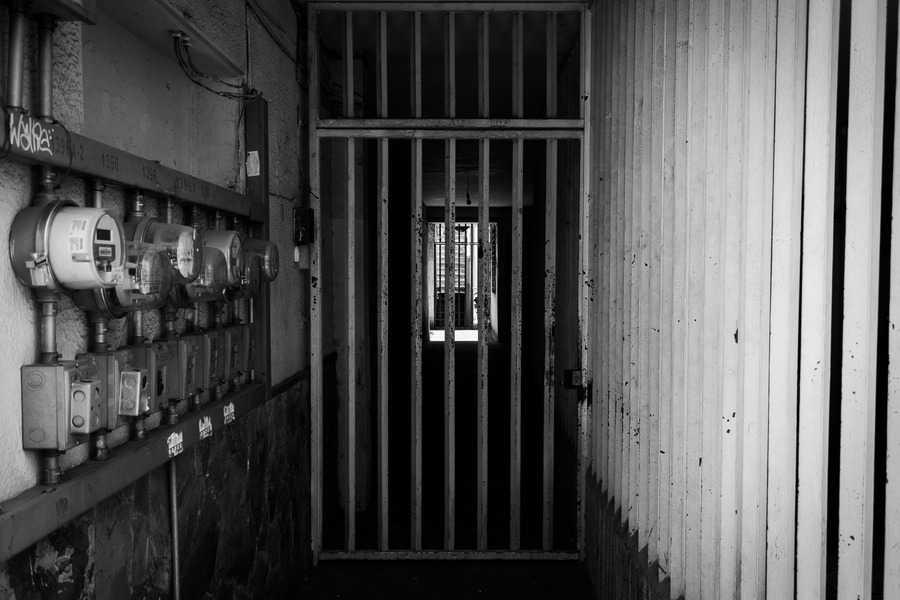
Two meters, or one meter counting twice
Before solar, a household has one relationship with the grid: it takes electricity and pays for it. After solar, it has two. It still imports whenever generation falls short of consumption, and it exports whenever generation exceeds it, and those two flows are settled under different arrangements that in most markets have no particular relation to one another.
Physically this is a single connection with power moving in whichever direction the instantaneous balance dictates, measured by a meter capable of counting both ways. Commercially it is two transactions, and the mistake most new owners make is to imagine them cancelling out. They do not cancel out unless the two rates happen to be equal, and they usually are not.
What the export arrangement pays, and how it is calculated, is the single most consequential fact about a domestic solar installation after the size of the array.
Why export is generally worth less than import
The price paid for imported electricity is not the price of electricity. It is the price of electricity plus the cost of transmitting it, distributing it, maintaining the network, funding whatever policy obligations the jurisdiction attaches to energy, and any tax applied on top.
When a household exports, none of those layers apply in the same way. What is being sold is bulk energy at a point on the low-voltage network, and it competes with wholesale generation rather than with retail supply. That is the structural reason export rates sit below import rates in most markets, and it is a reason rather than an injustice.
The size of the gap varies enormously and it is set by policy as much as by economics. Some jurisdictions mandate net metering, where exported units offset imported ones at parity, which effectively makes the grid a free and lossless battery. Others pay a modest wholesale-linked rate. Others pay nothing at all. The same roof produces the same electricity under all three and is worth entirely different amounts.
Self-consumption becomes the number that matters
Once export pays less than import, every unit consumed in the house at the moment it is generated is worth more than a unit sent out. The proportion of generation used on site rather than exported is called self-consumption, and under any tariff where the two rates differ, raising it raises the value of the array.
This reframes a great many household decisions. Running a dishwasher at midday rather than at midnight is not a small saving; it is the difference between a unit valued at the import rate and a unit valued at the export rate. Heating water with surplus generation, running a pool pump or charging a vehicle in daylight all work on the same principle.
There is a natural ceiling. A typical household is least occupied during the hours the roof produces most, which is precisely why self-consumption is often low without deliberate effort. Automation helps, and so does shifting the loads that do not care when they run. The loads that do care — cooking, lighting, evening heating — are largely immovable and will be imported.
How export gets measured, and why that matters
Not every arrangement measures export the same way, and the difference is worth understanding before assuming what you are paid for. Some schemes meter export directly, counting what actually crosses the boundary. Others estimate it as a fixed proportion of generation, regardless of what the house consumed.
A deemed arrangement of that second kind quietly changes the incentives. If export is assumed rather than measured, a unit consumed at home is worth the import saving and still counts as exported for payment purposes, so self-consumption becomes even more valuable than it first appears. Where export is measured, the choice is a straight comparison between the two rates.
The settlement interval matters too. Where import and export are netted over a half-hour period, brief mismatches between a cloud passing and a kettle boiling wash out. Where they are counted instantaneously, they do not, and a house can be simultaneously exporting from one phase and importing on another in some wiring arrangements. These are local technical details and they are worth asking about rather than assuming.
What this means before you sign anything
The questions to ask about the commercial side of an installation are short and specific. What does export pay, how is it measured, is the rate fixed or linked to a wholesale index, and how long is it guaranteed for? A quote that models a return without answering all four is modelling a guess.
It is also worth knowing whether the export arrangement is tied to a supplier, since in many markets it is, and changing supplier for a better import rate can mean losing a better export one. That is a real constraint and it is easy to discover too late.
None of this is stable. Export schemes are policy instruments, and policy changes with governments and with the amount of solar already on the network. An installation should be assessed on rates that exist now, with an honest acknowledgment that the arrangement may look different in a decade. Anyone quoting a fixed return over twenty-five years is asserting something they cannot know.
Common questions
Does exporting damage the grid?
Individually no, but at scale local networks were designed for power flowing one way and high concentrations of rooftop solar can push voltages up in a street. This is why some network operators impose limits on export capacity or require the inverter to reduce output under high voltage. It is a real engineering constraint rather than an obstruction.
Can I refuse to export and keep everything?
Only by consuming or storing it as fast as it is produced, which no ordinary household can do at midday in summer. Systems can be configured to limit or prevent export where a network operator requires it, but that means curtailing generation, not capturing it.
Is net metering better than a separate export rate?
For the household, generally yes, because it values an exported unit at the full retail price including all the network and policy costs bundled into it. Whether it is a fair arrangement overall is genuinely contested, since those costs still have to be recovered from somebody, and several jurisdictions have moved away from it for that reason.
Contributing editor, Power Your Roof
Tara writes about solar basics, batteries, bills & tariffs, mostly the parts other people skip and is happiest when a piece answers the question completely.