Bills & Tariffs
Time-of-use pricing rewards moving a load rather than shrinking it
When electricity costs different amounts at different hours, the cheapest saving available is often a timer rather than a smaller appliance.
By Tara Mukherjee4 min read
Why the hour has a price at all
Electricity cannot be stored at scale in the network itself, so generation has to match demand continuously, second by second. Meeting the last few per cent of demand on a cold evening requires plant that sits idle most of the year and is expensive per unit when it runs. Meeting demand at three in the morning requires almost nothing extra at all.
Wholesale markets have always reflected that, pricing energy by settlement period rather than as a flat commodity. What is newer for households is being exposed to it. A flat retail tariff is an averaging service: the supplier absorbs the variation and charges a single blended rate that includes the cost of that smoothing.
Time-of-use tariffs remove some of the averaging and pass the variation through. That is neither a discount nor a penalty in itself. It is a different allocation of risk, and whether it suits a household depends entirely on when that household uses electricity.
Shifting beats reducing, per unit of effort
On a flat tariff, the only way to spend less is to use less. On a time-of-use tariff there is a second lever, and it is frequently the easier one: use the same amount at a different time.
The appeal is that a great deal of household consumption does not care when it happens. A dishwasher run overnight cleans identically. A washing machine, a hot water cylinder, a vehicle charger and a pool pump are all indifferent to the clock, and between them they can account for a substantial share of a household’s electricity without anybody changing their behaviour in any way they would notice.
Compare that with reducing consumption, which generally means either spending money on more efficient equipment or accepting less of something. Shifting costs a timer and an afternoon of setup. It is the one energy measure with essentially no comfort penalty, which is rare enough to be worth exploiting first.
Where the loads actually are
The measure is only worth as much as the load being moved, so it pays to know which appliances hold real energy and which merely feel significant. Anything that heats or cools is where the energy lives: water heating, space heating, refrigeration, tumble drying and cooking. Anything that produces motion or light is generally an order of magnitude smaller.
This is why a hot water cylinder is the classic candidate. It is a heavy load, it is thermally insulated so it stores what it makes for hours, and nobody minds when the heating element ran as long as the water is hot when they want it. A well-insulated tank heated overnight is a thermal battery that came with the house.
Vehicle charging is the other transformative one, and it is large enough to change a household’s entire tariff calculation on its own. Where an electric vehicle is charged at home, overnight charging on a differentiated rate is usually the single biggest energy decision the household will make.
How solar and time-of-use interact
A solar array and a time-of-use tariff pull in opposite directions on some loads and the same direction on others, which is why the two need to be considered together rather than in sequence.
If the cheap window is overnight and the array produces at midday, there are two candidate times to run a flexible load and the better one depends on the arithmetic of your particular rates. Running the dishwasher at noon uses solar that would otherwise be exported, so the saving is the import rate minus the export rate. Running it at three in the morning saves the difference between the peak rate and the off-peak rate. Sometimes the first is bigger, sometimes the second, and the only way to know is to look at the four numbers.
In winter the question generally resolves itself, because there is little surplus generation to speak of and off-peak import wins by default. In summer the midday option usually wins. A household that thinks about this seasonally rather than setting one schedule and forgetting it will do better, though not by an amount that justifies obsessing over it.
When a time-of-use tariff is the wrong choice
These tariffs are not universally better and the honest advice is that they suit some households and penalise others. A home occupied all day, with heating and cooking demand concentrated in the evening peak and no flexible loads to move, may well pay more on a differentiated rate than on a flat one. The peak rate has to be higher than the flat rate for the arithmetic to work at all, and if most of your consumption sits in the peak, that is what you will pay.
The households that gain are the ones with something substantial to move: a vehicle, a heat pump with a buffer, an immersion heater, a battery, or simply an unusual amount of laundry. The households that lose are the ones with a flat, unavoidable evening-weighted profile and nothing to shift.
Before switching, the useful exercise is to look at your own half-hourly consumption data, which most smart meters make available, and apply the proposed rates to it. That is an arithmetic exercise on data you already have, and it beats any general rule about which tariff type is better. Rates and structures vary by country and change frequently, so a comparison done two years ago is not evidence about today.
Common questions
Do I need a smart meter for a time-of-use tariff?
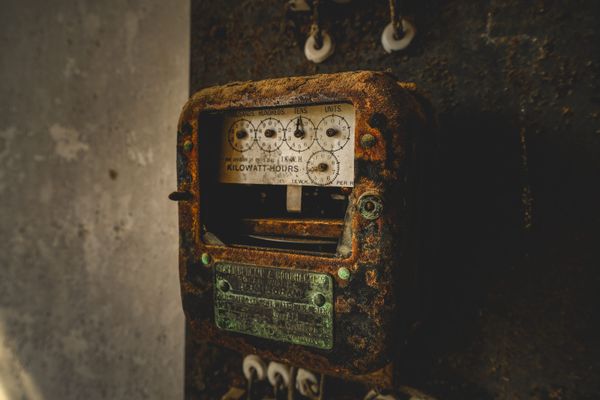
In practically all cases yes, because the supplier needs to know how much was consumed in each period. Some older arrangements used a separate meter and a timeswitch for a single off-peak window, and those still exist in places, but modern differentiated tariffs assume interval metering.
Is running appliances overnight a fire risk?
Unattended operation of appliances that heat is a real if small risk, and tumble dryers and dishwashers are the ones most often named in fire service advice. Whether that risk is acceptable is a personal judgement. A reasonable middle course is to shift loads to early morning while people are at home rather than to the middle of the night.
Will a battery let me ignore the timing question?
Partly, since a battery charged at the cheap rate can cover the expensive periods automatically. It does not remove the question so much as automate it, and it does so at the cost of the hardware and the round-trip losses. Shifting a load directly, where you can, is always more efficient than shifting it through a battery.
Contributing editor, Power Your Roof
Tara writes about solar basics, batteries, bills & tariffs, mostly the parts other people skip and is happiest when a piece answers the question completely.