Solar Basics
Ground mount versus roof, and what changes when the array leaves the building
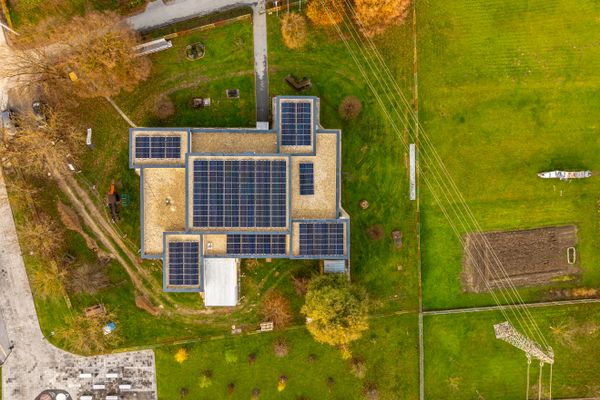
A ground-mounted array buys ideal orientation, cool running and easy access, and pays for it in foundations, cable runs, permissions and a security problem the roof never had.
By Tara Mukherjee4 min read
The roof is a compromise you inherited
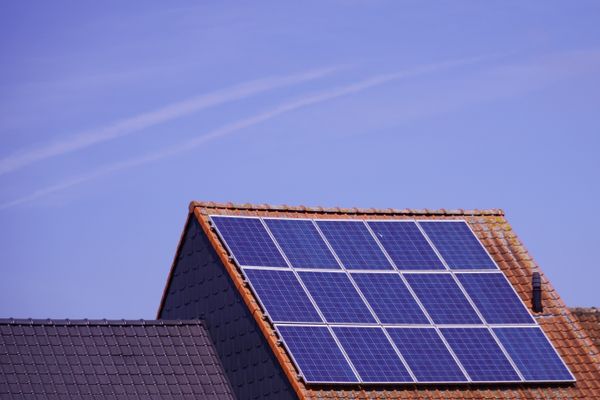
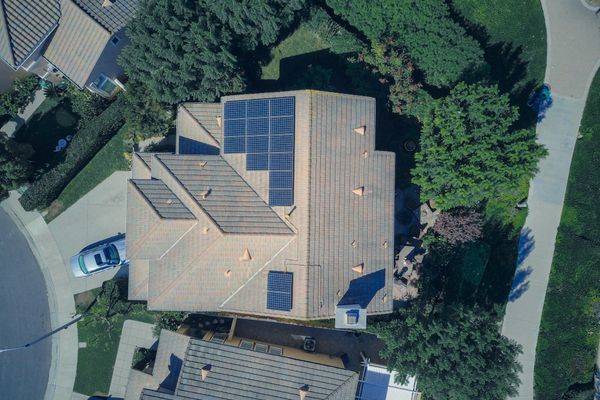
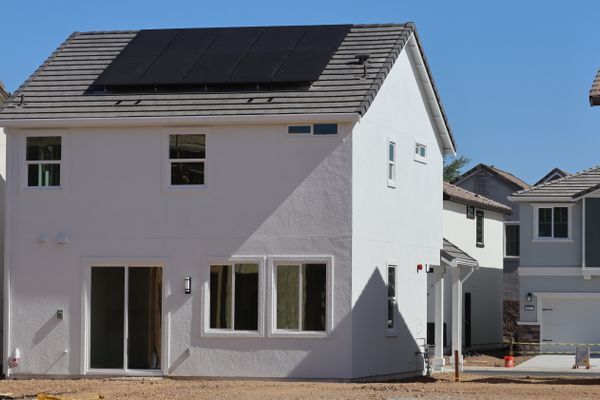
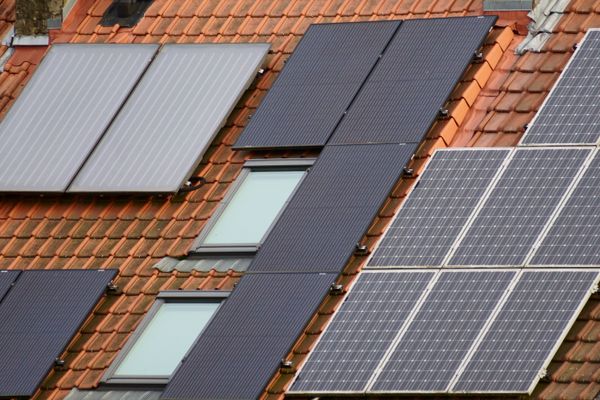
A roof array accepts whatever the builder decided decades ago. The pitch is fixed, the orientation is fixed, the available area is fixed, and any chimney, dormer or vent stack sits where it sits. Most domestic solar is a matter of making the best of that, and the flatness of the cosine curve is what makes the compromise tolerable.
Ground mounting removes every one of those constraints at once. You choose the azimuth, you choose the tilt, you choose the row spacing, and you can site the array where nothing shades it rather than where the house happens to sit. On a roof with a poor orientation or heavy shading, that freedom alone can be worth a substantial fraction of the annual yield.
There is a second gain that is easy to overlook. A ground-mounted array has open air on both faces, so it runs cooler than a flush-mounted one, and every degree of cell temperature avoided is recovered through the temperature coefficient. In a hot climate that difference isn’t trivial.
Access is worth more than it sounds
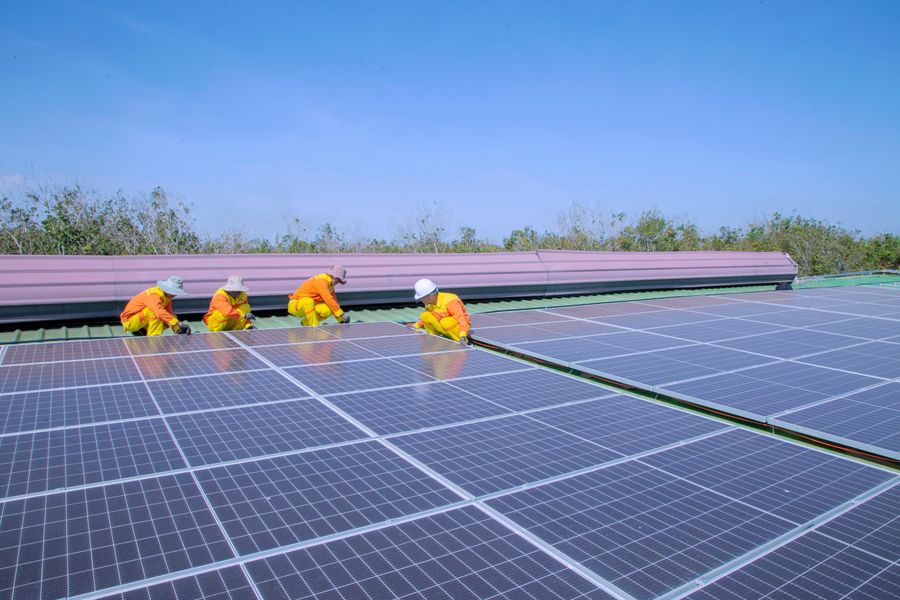
Everything that has to be done to a solar array is easier at ground level. Cleaning becomes a hose and a brush rather than a contractor with a tower. An annual look at the connectors becomes a walk rather than a scaffold. Replacing a failed module becomes an afternoon rather than an access-equipment hire.
That changes the maintenance economics over a system lifetime in a way no quotation captures. A fault that would be tolerated on a roof because the access cost exceeds the recovered energy simply gets fixed on a ground mount. Over twenty years that is a real difference in average performance, not merely in convenience.
It also changes what is reasonable to install. Module-level electronics are far less attractive on a roof partly because a failure puts a component out of reach, and that objection weakens considerably when the component is at waist height in a field.
What you take on instead
The structure has to be paid for. A roof already exists and is already carrying its own weight; a ground mount needs frames and either driven piles, concrete foundations or ballast, sized against the local wind code. That structural cost is the single biggest reason ground mounting is usually more expensive per unit of capacity than roof mounting, and it rises with exposure.
Then there’s the cable run. Electricity travelling any distance loses energy to resistance, and that loss rises with the square of the current, so a long run either needs thicker conductors or accepts a voltage drop. Designers manage it by keeping the string voltage high and the current low over the distance, and by sizing the cable properly, but the trench, the ducting and the copper all cost money that a roof system never spends.
And the array is now outdoors at ground level, which introduces problems a roof never had: vegetation growing into the rows and shading the bottom edge, livestock and machinery, mowing, flooding on low ground, and theft. Fencing is a common requirement and it is rarely in the first quotation.
Permissions differ, sometimes dramatically
This is where the local dependence is strongest, and no general statement survives a border crossing. In many jurisdictions a roof array on a domestic property falls under permitted development or a simple notification, while a free-standing array in a garden is treated as a structure and needs planning consent, particularly above a certain area or height.
The considerations that arise are the ordinary ones for any new structure: visual impact, proximity to boundaries, whether the land is designated or protected, and in some places whether the use of agricultural land is being changed. None of it is exotic and all of it takes time, which matters because it happens before anything can be ordered.
The electrical side is generally the same either way, since the connection to the network doesn’t care where the panels are. What differs is the wiring regulation applying to a run that leaves the building and crosses open ground, which brings its own requirements for burial depth, mechanical protection and earthing arrangements that a roof system does not encounter.
Who it suits, and who should not bother
The clear cases are the ones where the roof can’t do the job. A roof that is heavily shaded, oriented away from the equator, structurally unsuitable, thatched, listed, or simply too small for the intended capacity. If land is available and unshaded, a ground mount converts an unworkable project into a good one, and that is a very different proposition from a marginal improvement.
The unclear case is a household with a perfectly serviceable south-facing roof and a large garden, wondering whether the ground array would perform better. It probably would, by some margin, and the extra cost of the structure, the trench and the permission process will usually swallow that margin whole. On a good roof, the roof wins on economics even when it loses on physics.
And there is an honest reason to decline that has nothing to do with energy. A ground array occupies garden, permanently, in the sunniest part of it. That is a real cost to a household even though it never appears in a calculation, and anyone who values the space should weigh it before the yield modelling starts.
Common questions
How far apart do rows need to be?
Far enough that the front row does not shade the one behind it during the useful part of a winter day, which depends on latitude, tilt and how much winter production you are prepared to sacrifice. Higher latitudes need wider spacing because the winter sun sits lower, and the spacing rule is the main reason ground arrays need much more land than their panel area suggests.
Can panels sit on a garage or outbuilding instead?
Often yes, and it is frequently the best of both, provided the structure can carry the load and the orientation is decent. The cable run is shorter than a field mount, the structure already exists, and permission is usually simpler than for a free-standing array. The roof of an outbuilding is worth checking before dismissing the site.
Does grass under the array need managing?
Yes, and more than people expect, because vegetation growing up into the bottom row is a shading problem that reappears every growing season. Gravel, a membrane or regular mowing are the usual answers, and each carries either a cost or a recurring task. Leaving it to grow will quietly cost several per cent of annual output.
Contributing editor, Power Your Roof
Tara writes about solar basics, batteries, bills & tariffs, mostly the parts other people skip and is happiest when a piece answers the question completely.