Solar Basics
What happens to a solar panel when it finally comes off the roof
A module is mostly glass and aluminium wrapped around a small quantity of silicon, and the difficulty of recycling it lies entirely in how thoroughly those layers are bonded together.
By Daniel Okonkwo3 min read
A panel is a laminate, and that is the problem
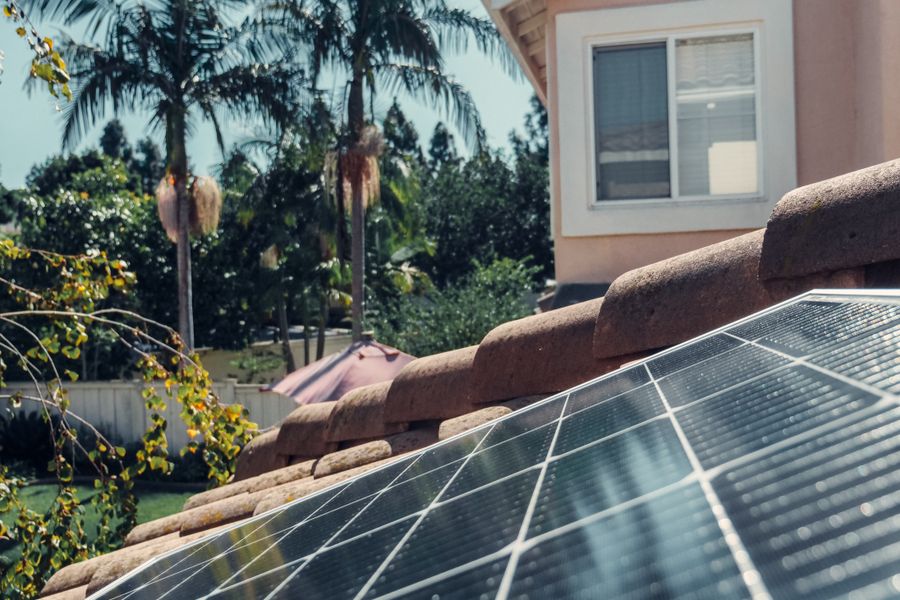
By mass, a conventional module is dominated by its glass front sheet and its aluminium frame, both of which are materials with mature recycling routes and genuine value. If a panel could simply be taken apart, most of it would go straight back into ordinary industrial streams without any special handling.
It cannot be taken apart easily, because the layers are deliberately fused. The cells sit encapsulated in a polymer that is cured under heat and pressure specifically so that no moisture reaches them for decades, and that same durability is what makes separation awkward at the end. A module is engineered to resist exactly the process recycling requires.
The result is that the frame and the junction box come off in seconds, and everything inside the glass takes real effort.
Two levels of recycling, doing different amounts of work
The simple approach removes the frame and the cabling, then crushes what remains and recovers the glass as a mixed cullet suitable for lower grade uses. It is cheap, and it diverts a large mass from landfill. It also loses the silicon and the small quantities of metal within the cells. Most of the weight is saved. Most of the value is not.
The thorough approach separates the layers, usually by heating the polymer until it breaks down or by treating it chemically, so that the glass comes away intact and the cell material can be recovered for reprocessing. It recovers considerably more and it costs considerably more, which is the tension the whole industry sits in.
Which of these actually happens to a given panel depends on local regulation and on what the nearest facility is equipped to do. In places where electrical waste rules cover modules explicitly, the answer is likely to be better than in places where they do not.
The quantities involved are still small, and that will change
Domestic solar reached significant volumes recently enough that most of the panels ever installed are still on roofs and working. The waste stream is therefore modest today and will grow substantially as those installations reach the end of their service lives, which is a predictable change rather than a speculative one.
That timing explains the current state of affairs. Dedicated recycling capacity exists but is thin, because there has not yet been enough material to support it in most regions, and processing infrastructure tends to follow volume rather than anticipate it.
It also means a panel removed today faces a different situation from one removed in twenty years. Guessing about the second case is not very useful, though the direction of travel is reasonably clear.
Reuse is often better than recycling and harder to arrange
A module removed after twenty years is usually still generating a substantial fraction of its original output, and for undemanding applications that is perfectly adequate. Second-hand panels find their way onto sheds, workshops, off-grid cabins and similar uses where the standard of performance is much lower than a household roof demands.
The obstacles are practical rather than technical. Nobody can certify the remaining life of an individual used module without testing it, the warranty is long gone, and the labour of handling and reinstalling secondhand panels is the same as for new ones while the value is far lower.
So reuse works best at small scale and close to home, where somebody wants a handful of panels and can collect them. As a route for large volumes it doesn’t scale, and treating it as the answer to end-of-life would be optimistic.
What an owner actually has to do
In most jurisdictions, disposal is the installer’s responsibility when panels are removed as part of a job, and there is frequently a producer-responsibility scheme that funds the handling of electrical waste including modules. Asking where the old panels are going, before the work starts, is a fair question and the answer should be specific.
Modules should not go into general waste or be broken up on site, both because the glass and the frame are genuinely recoverable and because local rules on electrical waste usually prohibit it. If you are handling a removal yourself, the local waste authority will say where they are accepted.
One thing not to do is treat end-of-life as a reason to delay an installation. The panels going up now will come down long after the current arrangements have been replaced by better ones, and a disposal question decades away is a poor argument against decades of generation in between.
Common questions
Are solar panels hazardous waste?
Conventional silicon modules are not usually classified that way, since they consist mainly of glass, aluminium, polymer and silicon with small quantities of metal in the cell contacts. Some thin film chemistries contain materials that are treated more carefully, and classification differs between jurisdictions. The practical answer is that modules generally fall under electrical waste rules, and the local waste authority is the place to confirm it.
Can I sell my old panels when I upgrade?
Sometimes, to a buyer who wants them for a low-stakes application and can collect them. The market is informal and the value is low, because a used module carries no warranty and no verified remaining output. It is worth a few enquiries locally before assuming they have to be scrapped.
Does recycling recover the silicon?
Only in the more thorough processes. Simple mechanical recycling recovers the frame and the glass but loses the cell material into the mixed fraction, whereas processes that break down the encapsulant can recover higher purity material. Which one your panels meet depends on the facility that receives them, not on the panel itself.
Editor, Power Your Roof
Daniel writes the explanatory pieces on solar basics, batteries, bills & tariffs and is unreasonably interested in the detail nobody else checks.