Solar Basics
Why an array is often larger than the inverter it feeds
Fitting more panel capacity than the inverter can pass looks like a mistake and is usually deliberate, because the roof almost never delivers its nameplate.
By Arjun Nair4 min read

The mismatch has a name and a reason
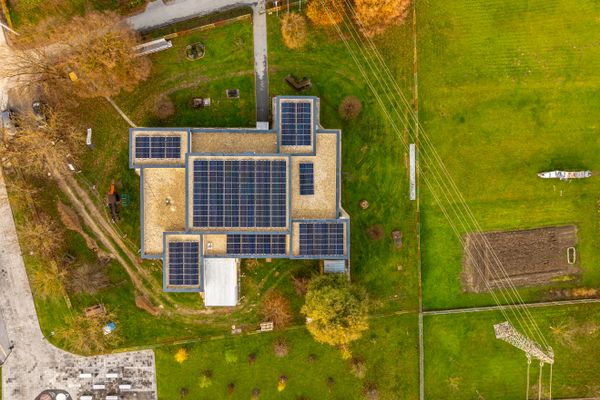
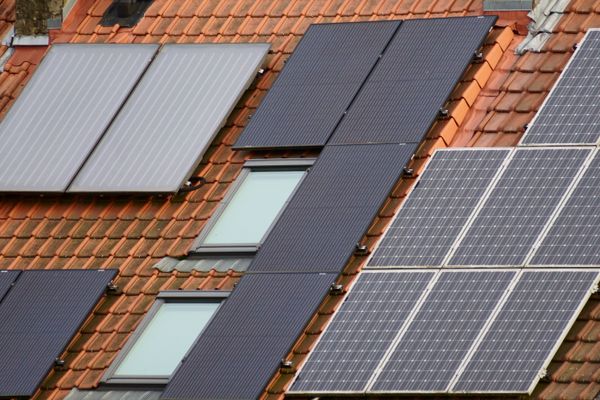
Look closely at a quotation and you will often find that the panels add up to more capacity than the inverter is rated to deliver. A number of modules at some watts each, feeding an inverter rated below their sum. It looks like an error, or like a corner being cut, and in most cases it is neither.
The relationship between the two is usually expressed as a ratio, and installers routinely design at a ratio above one. The reason is simply that the panel rating and the inverter rating describe different things: one is a laboratory maximum that the array reaches for a handful of hours a year, the other is a continuous throughput the inverter can sustain.
Buying an inverter sized for a peak that almost never occurs means paying for capacity that sits idle almost always. Buying one sized for the realistic working range means occasionally leaving a little energy behind. Which trade is better depends on the site, and there is a defensible answer in both directions.
The roof rarely delivers the number on the label
A module’s rating comes from a test at a defined irradiance, a defined cell temperature and a defined spectrum, and a roof supplies that combination essentially never. The single largest departure is temperature. Cells in bright sun run considerably hotter than the test condition, and output falls with temperature by a coefficient stated on the datasheet.
Then there is everything else. The array is rarely pointed perfectly at the sun. Some light is lost in the glass and some in the cabling. Soiling takes a little. Modules within a string are never quite identical, and the string is limited by its weakest member.
Stack those together and the realistic peak from a domestic array on a good day sits some way below the sum of the labels. That gap is not a defect, and it is the space in which oversizing lives.
Clipping costs less than the shape of it suggests
When the array does momentarily produce more than the inverter can pass, the inverter limits the output. On a graph the day’s curve gets a flat top, which looks alarming because the eye reads the missing area as a large loss.
Do the arithmetic instead. The very highest production occurs in a narrow band around solar noon, on clear days, in the best months, and the curve is steep on either side of it. The area under a flat top a few per cent below the theoretical peak, for the small number of hours it applies, is a small fraction of an annual total.
There is a case where clipping is actively useful. An inverter running near its rated output is generally operating in its efficient region, so a moderately oversized array keeps the inverter working well for more hours of the day rather than idling at low load through the morning and afternoon.
Where oversizing stops being sensible
The trade turns on climate and orientation. A clear, cool, high-irradiance site produces close to nameplate more often, so clipping bites harder and the acceptable ratio is lower. A cloudy maritime climate, where the array rarely approaches its rating, tolerates far more oversizing before any energy is genuinely lost.
Array shape matters too. An east-west split produces two broad, low humps rather than one sharp peak, and the combined output rarely troubles the inverter at all, so a higher ratio is easy to justify. A single south-facing array at a good tilt is the configuration that clips soonest.
There are limits set by the equipment rather than by economics. Inverters state a maximum input power and a maximum input current, and exceeding those is not a design choice but a fault that can void a warranty and stress components. There is also heat: an inverter clipping for hours dissipates that as warmth, and one mounted in a hot, unventilated space will run hotter and age faster for it. Sizing within the manufacturer’s stated envelope is the installer’s responsibility and the wiring rules apply.
The opposite mistake, which is quieter
Undersizing the array against the inverter is less discussed and can waste more. Conversion efficiency is not flat across the load range; it falls away at very low output, because the inverter’s own consumption and switching losses become significant relative to what is passing through. An inverter spending its life at a small fraction of rated output converts less efficiently than one working in its band.
Every inverter also draws a little power simply to be switched on and watching, and at night it draws that for nothing. On an oversized inverter attached to a small array, that overhead is a larger share of the annual total.
None of which means an inverter should be chosen at the bare minimum. Headroom for a future extension is a real consideration, and so is availability. But a substantially oversized inverter bought for headroom that never arrives is money spent on an efficiency penalty, and it is worth asking what the extra capacity is actually for.
Common questions
How much oversizing is normal?
Ratios modestly above one are common and ratios well above it appear in cloudier climates and on east-west arrays. The right figure depends on irradiance at the site, orientation, tilt and the inverter’s stated input limits, so it is a design calculation rather than a rule of thumb. The one hard boundary is the manufacturer’s maximum input voltage, current and power.
Will clipping damage the inverter?
Limiting output is a designed behaviour, not a stress condition, and the inverter reduces the power it draws from the array by shifting its operating point. Sustained operation at full rating does produce heat, so ventilation and mounting location matter more on an oversized system than on a conservative one.
Can I add panels to an existing system later?
Sometimes, and it depends on the headroom in the inverter, the string voltage limits, and whether a compatible module is still available. It may also need the network operator to be notified again. Ask before assuming, because a full inverter means either a second inverter or a replacement.
Staff writer, Power Your Roof
Arjun has been reporting on solar basics, batteries, bills & tariffs since long before it was fashionable and thinks most subjects are more interesting once you know how they work.