Solar Basics
What moves in underneath a solar array
The gap between panels and tiles is sheltered, warm and inaccessible, which makes it attractive to birds and rodents and occasionally expensive.
By Daniel Okonkwo4 min read
A cavity that did not exist before
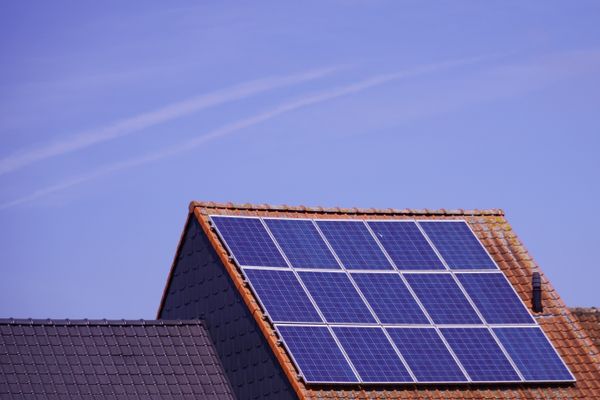
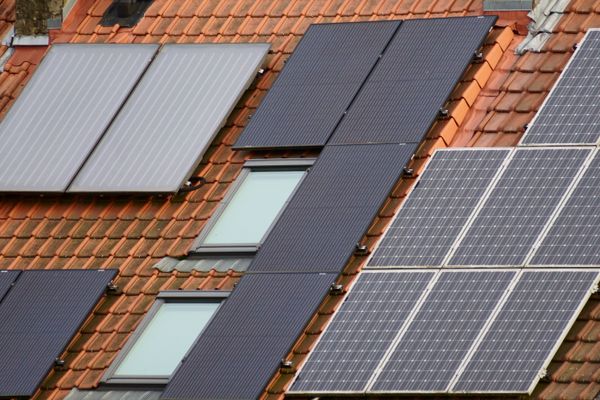
Mounting an array on a pitched roof creates a space that the building never had: a few centimetres deep, sheltered from rain and wind, warm on a sunny day, and open along all four edges. Nothing about that is a defect. The gap is essential to the array, because modules run cooler with air moving behind them and cooler modules produce more.
From an animal’s point of view it reads as an unusually well-built ledge with a roof over it. Pigeons in particular find it ideal, since it is flat, dry, defensible and out of reach of most things that would otherwise bother them. Squirrels and rodents in some regions treat it the same way.
Whether this becomes a problem varies enormously by location and by what already lives around the building. Plenty of arrays go their whole life with nothing under them at all. It is worth knowing what the failure looks like rather than assuming either outcome.
What actually causes harm
Nesting material is the first issue and the least dramatic. Twigs, feathers and general debris accumulate under the modules, which obstructs airflow, retains moisture against the tiles, and in time blocks the path water is supposed to take down the roof. Water that cannot run downhill finds another route.
Droppings are the second, and they are more consequential than they sound. Deposits on the lower edge of a module shade cells, and shading a cell in a series string does not cost you that cell’s share. It forces current through a shaded cell, which either triggers a bypass diode and takes a whole sub-string offline or, if the obstruction is partial, produces a hot spot.
The third is the one that matters for safety rather than yield. Rodents gnaw, and the cabling running between modules carries direct current at a voltage that does not stop when the sun is up. Damaged DC insulation is a fire and shock risk, and it is not a homeowner repair. If cable damage is suspected, the system should be isolated and inspected by a qualified installer working to the local wiring rules.
Debris arrives without any help from wildlife
Even a roof with nothing living under it collects material. Leaves blow in and lodge against the module frames. Moss travels from the tiles. Dust settles and, at the lower edge where the frame stands slightly proud of the glass, the frame acts as a small dam that holds a film of water and whatever is suspended in it.
That lower lip is where soiling concentrates on almost every array, and it is why a panel can look clean across most of its face and still have a dark line along the bottom. It is also the strip that shades a whole row of cells if it becomes continuous.
Rain does most of this work by itself where rain is reliable. In a dry season, under a tree, or on a shallow tilt where water does not run off decisively, it does not, and material accumulates until something removes it.
Mesh and skirts, and what they cost you
The common remedy is a barrier around the perimeter of the array: a mesh clipped to the module frames or a moulded skirt closing the gap between panel edge and roof. Both work, in the sense that they stop birds getting underneath, and both introduce trade-offs worth understanding before agreeing to one.
A closed perimeter restricts the airflow that keeps modules cool, and the effect on output is real but small. More importantly, a mesh catches leaves and windborne debris that would previously have blown through, so the perimeter becomes a filter that fills up. A barrier fitted and then never inspected can leave a roof worse off than no barrier.
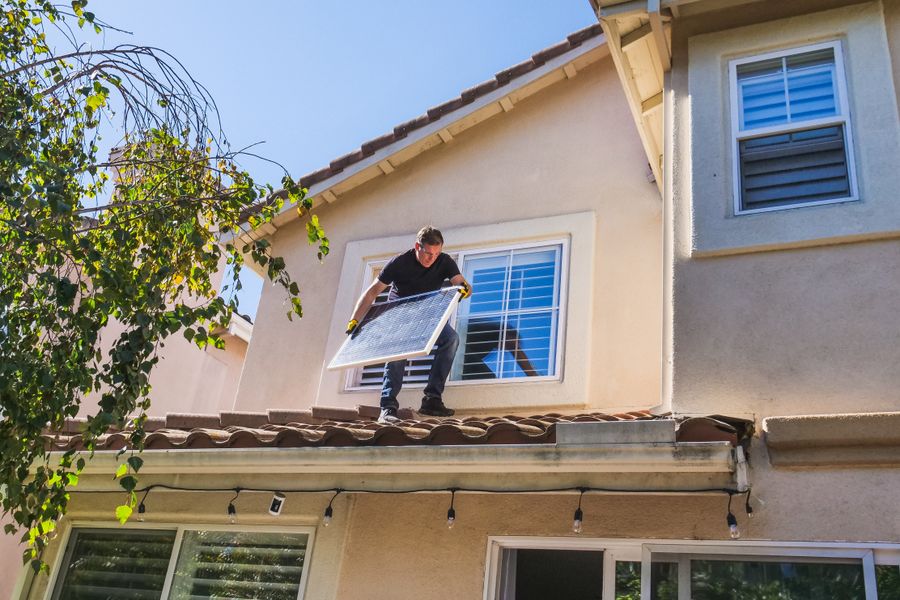
The installation detail matters more than the product. Mesh should clip to the module frames, not be screwed through anything, and nothing about pest-proofing justifies a new hole in a roof. It also needs to be removable, because at some point someone will have to get under there.
Mostly, the right action is nothing
This is a maintenance category where the honest advice is to look occasionally and intervene rarely. A pair of binoculars from the garden, once or twice a year and after a storm, tells you almost everything: whether there is material visible at the edges, whether droppings are building along the lower frames, whether anything has obviously shifted.
Getting a person onto a roof costs real money and carries real risk, and doing it annually as a precaution against a problem that has not appeared is poor value. Monitoring provides the other half of the picture, since a string that has quietly lost a segment shows up as a shortfall against its neighbours long before anyone sees why.
Act when there is evidence. A visible nest, a sudden drop in one string, obvious debris packed under the modules, or the sound of activity in the roof space are all reasons to get someone up there. A general unease about birds is not.
Common questions
Do spikes or deterrent gels work on a solar array?
They are usually the wrong tool. Anything adhesive or sharp fixed near modules interferes with cleaning and can damage seals, and deterrents placed on the roof surface tend to move the birds a metre rather than away. A physical barrier at the array perimeter addresses the actual attraction, which is the sheltered gap.
Does a bird nest under the panels affect output much?
Only where it shades cells or blocks airflow to a specific module, and both are possible. The more common consequences are water finding a new path across the roof and material accumulating against tiles. Output loss is often the symptom that gets noticed first, though it is rarely the worst of it.
Is there a risk to the roof itself?
Yes, indirectly, and it is the reason to take accumulation seriously. Trapped organic material holds moisture against tiles or membranes for long periods, and persistent damp shortens the life of most roof coverings. The array is not the problem; what collects under it can be.
Editor, Power Your Roof
Daniel writes the explanatory pieces on solar basics, batteries, bills & tariffs and is unreasonably interested in the detail nobody else checks.