Bills & Tariffs
A block of flats is the hardest place to share a solar roof
One array, one roof and many meters is a problem of allocation rather than engineering, and the difficulty is legal and administrative rather than electrical.
By Daniel Okonkwo4 min read
The roof belongs to nobody in particular
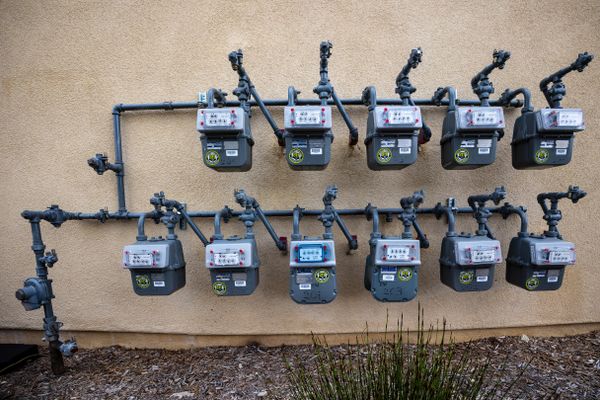
In a house, the person who owns the roof is the person who pays the electricity bill, which makes the entire arrangement simple. In a block of flats the roof is typically common property, the residents each have their own supply and meter, and the party with authority over the structure is often not a party that consumes anything.
That separation is the whole problem. An array installed on shared property generates electricity that has to reach somebody through a meter, and there is no obvious somebody. Every workable answer is a way of resolving that question rather than a technical design.
The physics is easy. The paperwork is not.
The landlord supply is the straightforward case
Almost every block has a communal supply feeding lifts, corridor lighting, pumps, entry systems and sometimes ventilation. It is metered as one account, paid through the service charge, and it runs continuously at a fairly predictable level.
Connecting an array to that supply is genuinely simple, because there is one meter and one bill and the benefit flows to all residents through a reduction in the shared cost. The load is steady and daytime-weighted, which suits generation well, and no allocation between dwellings is required.
The limit is size. Communal loads are modest compared with the roof area available, and once the array covers them the surplus has nowhere useful to go except export. For many blocks this is nonetheless the sensible project, precisely because it avoids everything that follows.
Supplying the individual flats requires machinery that mostly does not exist
Sending generation to the dwellings themselves means either physically rewiring so that a private network sits behind a single connection, or using an arrangement in which the network operator allocates generation across separate meters administratively. The first is a major electrical project. The second requires a regulatory framework that only some countries have.
Where such frameworks exist they go by various names and they work by agreeing a split — fixed shares, or shares that vary with consumption — and applying it to the metered generation. The concept is sound and the implementations differ in detail everywhere they appear.
Where no such framework exists, there is no lawful way to send electricity from a shared array to a private meter, and no amount of cabling changes that. It is worth establishing which situation you are in before spending anything on design.
Fairness is a governance problem with no neutral answer
Any allocation between dwellings has to be agreed, and the obvious options each favour somebody. Splitting equally advantages the heaviest consumers. Splitting by consumption advantages nobody in particular and requires ongoing data. Splitting by floor area or by service-charge share is administratively easy and bears no relation to who uses electricity.
On top of that sits the question of who paid. A scheme funded from reserves is funded by everyone including the residents who were about to move, and one funded by a levy raises the question of whether a future owner inherits the benefit or the debt.
These are the discussions that stall projects, and they are not solved by better equipment. They are solved by a written agreement that everyone has read.
The practical obstacles that arrive before any of that
Roof access, structural capacity, the lease terms governing alterations to common parts, insurance, and the fire strategy of a multi-storey building are all live questions in a block and largely settled ones on a house. Several of them require professional input rather than an installer’s opinion, and the fire and structural questions in particular are matters for qualified assessment and local building rules.
Older blocks frequently have a communal supply already close to its limit, which constrains what can be connected without an upgrade. And a building with a flat roof may have competing claims on it — plant, access routes, a terrace, a future recovering — that a single owner would simply decide about.
None of this makes it impossible. It makes it a building project with an energy component rather than an energy project.
What is usually worth doing, and what usually is not
Serving the communal supply first is the reliable win, and for most blocks it is where the project should start and often where it should stop. It is small, it is uncontroversial, and it reduces a cost every resident already pays.
A full shared-generation scheme across the dwellings is worth pursuing where the regulatory framework exists, the block is well run and the residents are broadly aligned. Where any of those is missing, the scheme is likely to consume years of committee time and arrive nowhere, and it is fairer to say that at the outset than to discover it in the third year.
Common questions
Can I put panels on the roof above my own flat?
Almost never without permission, because the roof is usually common property governed by the lease or the equivalent local arrangement rather than something attached to an individual dwelling. Even where a top-floor property appears to include roof rights, alterations to the structure and the building’s insurance and fire strategy are normally matters for the freeholder or the management company. It is a legal question to settle before a technical one.
Is it worth installing solar just for the communal supply?
Frequently yes, because that supply runs continuously through the day and is metered as a single account, which is exactly the profile generation suits. The array will be small relative to the roof, and the benefit reaches residents through a reduced service charge rather than through their own bills. It is modest and it is achievable, which is more than can be said for most alternatives.
How is shared generation split between flats?
By whatever the participants agree and the local framework permits, which commonly means fixed percentage shares or shares that follow measured consumption. There is no standard answer and no method that is objectively fair, since each option benefits a different group of residents. The important thing is that the method is documented and that it says what happens when a flat changes hands.
Editor, Power Your Roof
Daniel writes the explanatory pieces on solar basics, batteries, bills & tariffs and is unreasonably interested in the detail nobody else checks.