Bills & Tariffs
Changing supplier is harder once the roof is exporting
A generating household is running two arrangements at the same boundary, and the process that makes switching easy for everyone else was not designed with the second one in mind.
By Manish Trivedi3 min read
Two agreements at one meter
A household without generation has a single relationship with a supplier: it buys electricity and it pays for it. A household with an array has that plus an export arrangement, and although both usually sit with the same company, they are separate agreements with separate terms and separate ways of ending.
Switching machinery in most markets was built for the first relationship. It moves the import account cleanly and quickly, and what happens to the second one depends on rules that vary by country and on the practices of the two companies involved.
The result is that switching works, and it occasionally leaves loose ends that take months to surface.
The export arrangement may not travel with you
Whether an export agreement transfers automatically, has to be applied for again with the new supplier, or simply lapses is entirely a matter of local arrangement. In some markets the two can be held with different companies and there is no difficulty at all. In others they must sit together, and moving one obliges you to move the other.
The failure mode is quiet. Generation continues, the array carries on working, and the payments simply don’t arrive because nobody at either company opened the account. Nothing alerts you, since the system that would have told you is the one that was never set up.
Which is why the first thing to check after a switch completes is not the import rate. It is whether an export account exists.
Meter readings at the changeover are worth getting right
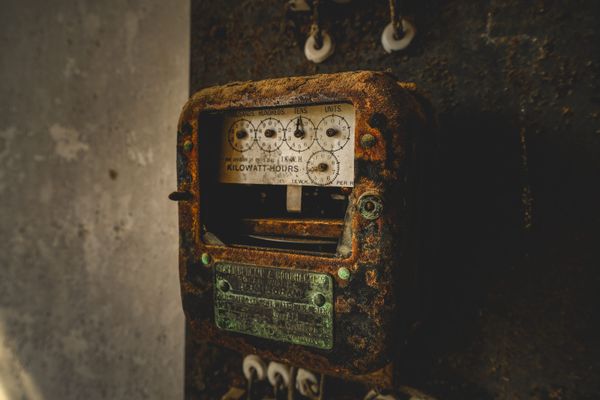
A switch settles the old account at a reading taken on the transfer date, and for a household with an export meter or a meter recording in both directions there are two figures rather than one. If either is estimated, the correction lands later and it can land in an unhelpful direction.
Taking dated photographs of the meter display on the day of transfer costs a minute and settles almost every dispute that follows. It’s dull advice, and it is the single most useful thing in this article.
Where a separate generation meter exists, record that as well, even if nobody has asked for it. The reading is easier to capture now than to reconstruct later.
A generating household is a bad fit for a comparison table
Comparison services rank tariffs against a consumption figure, and for a solar household the figure that matters is imported units rather than total household use. Those two numbers can differ substantially, and a comparison built on the wrong one ranks the options in the wrong order.
Worse, the shape of the consumption is unusual. A generating household imports little during the day and disproportionately in the evening and through the winter, so a tariff that suits the average customer may not suit it at all.
The workaround is to take actual imported figures from recent bills or from meter data, then compare on those. It takes longer than a postcode and a slider, and it is the only way the exercise means anything.
The equipment can complicate matters more than the contract does
Some suppliers offer tariffs tied to specific hardware, where a battery or a charger is controlled by the supplier and the pricing depends on that control. Leaving such a tariff can mean losing that functionality, and joining one can require a firmware change or a compatible product.
This is worth treating carefully, because it couples a decision about electricity pricing to a decision about equipment you own. A supplier who can turn a feature off is a different kind of counterparty from one who simply sends bills, and the arrangement should be entered knowingly.
It is not a reason to avoid such tariffs, which can be genuinely good. It is a reason to know what is conditional on staying.
A short sequence that avoids most of the trouble
Before switching, confirm in writing what happens to the export arrangement and whether the new supplier accepts it. On the day, photograph every meter. Afterwards, check within a couple of months that both an import account and an export account exist and that generation is being credited somewhere.
If a payment has not appeared after a full billing period, chase it rather than waiting, because these cases are resolved by someone opening a missing account and that only happens when asked. Most of the time none of this is necessary. The times it is, it saves a year of unnoticed silence.
Common questions
Can my export payments be with a different company from my import supply?
In some markets yes and in others no, and it is one of the details that differs most between countries. Where it is allowed it can be worth doing, since the best import deal and the best export terms rarely come from the same place. Where it is not allowed, the two must be assessed as a package.
Will switching supplier affect my solar installation?
The physical installation is unaffected, since it belongs to you and is connected to the network rather than to a supplier. What can be affected is anything the supplier controls or pays for: the export arrangement, a controlled-charging tariff, or a battery that the supplier dispatches under an agreement. Those are contractual rather than technical.
How long should I wait before chasing a missing export payment?
Give it one full billing cycle after the switch completes, then ask directly whether an export account has been created. Waiting longer rarely helps, because the usual cause is an account that was never opened, and that does not resolve itself with time. Keep the meter readings you took on the transfer date until it is settled.
Deputy editor, Power Your Roof
Manish has been reporting on solar basics, batteries, bills & tariffs since long before it was fashionable and would rather show the working than assert the conclusion.