Installation
An ageing roof should be replaced before the array goes on it
Panels outlive most roof coverings, and removing an array to re-cover the roof underneath costs the access, the labour and the risk all over again.
By Arjun Nair4 min read
Two components with mismatched lifetimes
A solar array is designed to work for decades. Roof coverings also last decades, and rarely the same ones, so the two clocks are almost never synchronised. Fitting a long-lived array over a covering with a few years left in it guarantees that at some point the array will have to come off, and go back on, purely to allow work underneath.
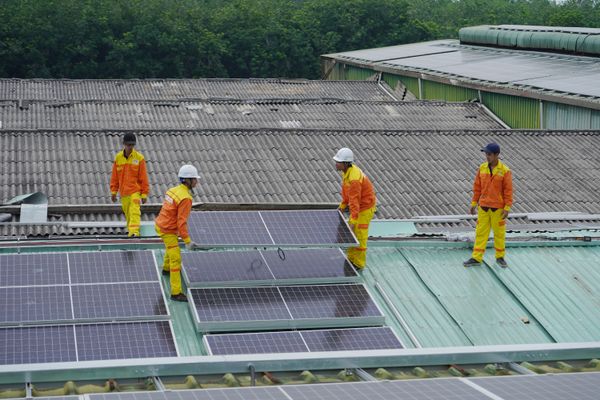
That operation is not a trivial one. It means access equipment again, two visits by the solar trade, roofing work in between, and a period during which the system produces nothing. Modules are also at their most vulnerable while being handled, and microcracks caused during removal and refitting won’t announce themselves for years.
None of this is an argument against solar on an older house. It is an argument for asking one specific question before ordering anything: how many years does this covering have left, and does that number resemble the design life of the system going on top of it?
Judging what a covering has left
Different materials age at very different rates, and local climate drives the difference more than the material does. Natural slate can last a very long time indeed. Concrete and clay tiles last a long time but not indefinitely, and they become brittle with age, which matters because a brittle tile breaks when a fitter kneels on it. Bituminous shingles have shorter lives, and ultraviolet exposure shortens them further in sunny climates.
What often fails first is not the visible covering at all. Beneath it sit the underlay and the battens, and both age out of sight. A felt underlay that has become brittle will tear at every nail, and battens weakened by rot or by old woodworm damage won’t hold a mounting hook reliably however sound the tiles above them look.
The most useful inspection is therefore from inside. In the loft, look along the underside for daylight, for staining that indicates a persistent leak path, for sagging between rafters, and for underlay that has gone dark and papery. Combine that with the roof’s known age and it is usually possible to tell the difference between a covering with a decade left and one with three.
The survey has to answer two separate questions
A structural assessment asks whether the rafters, purlins and fixings can carry the extra load and, more importantly, the uplift. A condition assessment asks whether the covering and underlay will remain weathertight for the life of the array. They are different questions, they are often answered by different people, and one is frequently skipped.
A surveyor who only looks at the electrical intake and the roof pitch has not done the second. Ask explicitly for a view on remaining life of the covering, and ask for it in writing, because it is the finding that determines whether this project should happen this year or after the roof is done.
Where the answer is genuinely uncertain, that uncertainty is itself information. A roof that might have five years left and might have fifteen is a roof where the cheap option is to wait, unless something else is forcing the timing.
Doing both at once is much cheaper than doing them in sequence
If the covering is near the end of its life, combining the two jobs saves a substantial amount of money, because the largest shared cost is access. One scaffold, one set of mobilisations, one period of disruption. The roofing trade and the solar trade can work in sequence over a fortnight rather than five years apart.
It also opens mounting options that are awkward to retrofit. In-roof systems, which replace the covering across the array area rather than sitting above it, are far simpler to install as part of a re-covering, and integrated flashing details are easier to get right when the roofer is present rather than working around finished work.
There is a coordination cost, and it is real. Two trades and one programme means someone has to manage the interface, and if the roofing runs late the solar crew arrives to a roof that isn’t ready. Agreeing the sequence in advance, in writing, is worth more than it sounds.
Partial replacement is a compromise with a catch
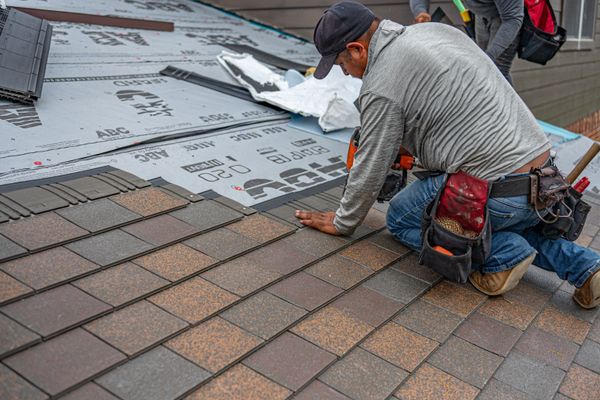
A tempting middle path is to re-cover only the section of roof the array will occupy, leaving the rest for later. It reduces the immediate cost and it introduces a junction between new and old covering, which is a water path that did not exist before and has to be detailed properly.
It also leaves the rest of the roof ageing on its own schedule, so the scaffold will return, and when it does the array will be in the way of the ridge, the flashings or the section next to it. The saving is genuine and smaller than it appears once the second visit is counted.
Where partial work makes sense is on a roof with several distinct planes, when the array occupies one plane entirely and that plane can be dealt with as a unit. Where it makes least sense is a single large slope with a patch of new tiles in the middle of old ones, which is both a maintenance problem and, for what it is worth, visible from the street for the next thirty years.
Common questions
Does an array shorten the life of the roof beneath it?
Generally the opposite, since the covering under the panels is sheltered from ultraviolet light, hail and much of the weather. The area around the array sees no such benefit, and the fixings themselves are the vulnerability. So the roof under the panels tends to age more slowly while the penetrations become the thing to watch.
Can panels be moved temporarily and put back?
Yes, and it is routine work for roofing and solar trades together, and it costs both of them a visit. Expect the electrical connections to be tested again afterwards, expect a small risk of module damage, and expect the modules to be a decade old by then, which complicates replacing any that do not survive the handling.
Is an in-roof system better on a new covering?
It looks considerably neater and it removes the standard bracket penetrations, replacing them with a tray or flashing system that becomes part of the roof. In exchange it usually runs hotter, because ventilation behind the modules is restricted, and it demands a higher standard of detailing. On a re-covering it is worth considering; as a retrofit onto a sound roof it rarely is.
Staff writer, Power Your Roof
Arjun has been reporting on solar basics, batteries, bills & tariffs since long before it was fashionable and thinks most subjects are more interesting once you know how they work.