Installation
Every roof penetration is a future leak unless the detail is right
Mounting an array means passing fixings through the weatherproof layer of a building, and the difference between a good installation and a bad one is almost entirely in how those holes are handled.
By Arjun Nair4 min read
The array has to be attached to the structure, not the covering
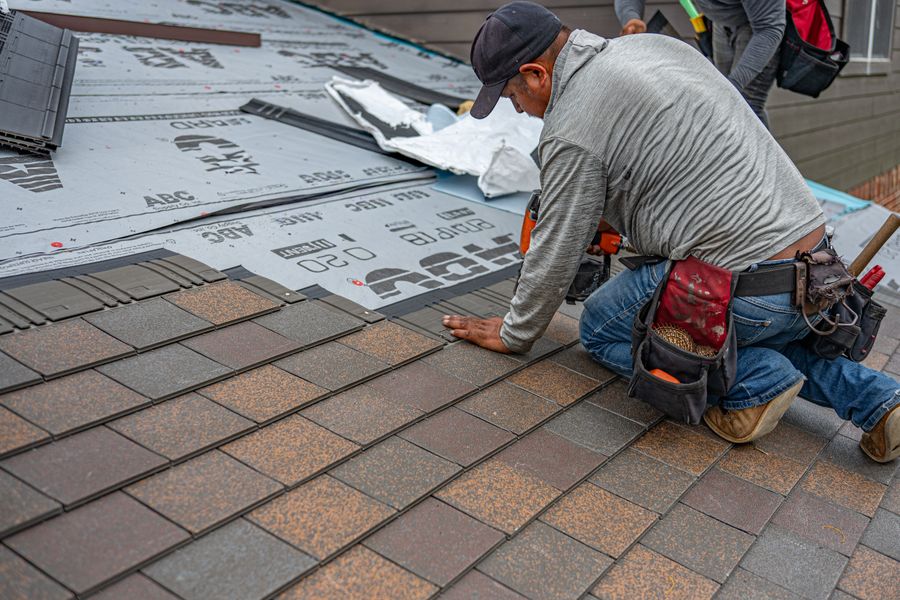
A roof covering keeps water out. The structure beneath it holds the building up. They are separate jobs and separate layers, and an array has to be fixed to the second while passing through the first, because tiles and slates cannot carry the loads involved.
That single requirement generates every difficulty in rooftop mounting. Each bracket is a hole in the weatherproof layer, and there may be dozens of them. Multiply a small chance of a poor detail by the number of penetrations and by the decades the installation is meant to last, and the arithmetic explains why leaks after solar installation are a recognisable category of complaint.
The good news is that this is a solved problem with established methods for every common roof covering. The bad news is that solved problems still require somebody to carry them out properly on a cold afternoon when the job is running late.
Water goes downhill, and laps are how a roof works
A pitched roof is not waterproof in the way a membrane is. It is a set of overlapping pieces arranged so that water running down the surface always passes over the top of the piece below and never runs into a joint. The technical term is a lap, and the whole system depends on it.
A correct mounting detail preserves that logic. The bracket passes through, and a flashing plate or a shaped hook is arranged so that the covering above it still overlaps whatever the bracket disturbed. Water reaching the penetration runs over the flashing and continues down the roof as it did before. Nothing relies on a seal.
An incorrect detail breaks the lap and then attempts to compensate with sealant. That works for a while, and then it does not, because the sealant is exposed to ultraviolet light and thermal movement and eventually cracks. Sealant belongs in an installation as a secondary defence behind a correct geometric detail, never as the primary one.
Each covering has its own method
Plain tiles and interlocking tiles are usually handled with a hook that passes under the tile above and sits on the batten or the rafter, sometimes with the tile beneath dressed or a small section removed so the hook does not force it to sit proud. A tile lifted out of plane by a hook is a common defect and it lets wind-driven rain track sideways.
Slate is less forgiving because it cannot be locally trimmed as easily, and the usual approaches involve either a hook that sits in the joint between slates or a flashing sheet that replaces a slate entirely. Both are ordinary roofing work and both are noticeably harder than tile.
Standing seam metal roofs allow something better than all of this: clamps that grip the raised seam without any penetration at all. Where the covering permits it, a non-penetrating fixing is simply superior, since a hole that was never made cannot leak. Flat roofs sit at the other extreme, where either the membrane is penetrated and the detail is welded or bonded in, or the array is ballasted and nothing is pierced.
The penetrations people forget
Cables have to get from the roof into the building, and that entry is a penetration too. It is frequently a smaller and less considered one than the mounting brackets, made late in the job, and it is a common source of water ingress and of draughts.
A proper cable entry uses a purpose-made roof gland or is routed through an existing ventilated route with a drip loop so that water running along the cable falls off before it reaches the hole. A cable pushed through a drilled hole and sealed with mastic is the classic bad detail, and it is easy to inspect for from inside the loft.
Mounting rails themselves can create problems without piercing anything, by trapping debris. A rail running across the fall of the roof forms a small dam where leaves and moss collect, which holds water against the covering. Rails are normally run with the fall for that reason, and where they cannot be, the detail deserves a look.
Inspecting the work you have paid for
Most of an installation is invisible from the ground once the scaffolding has gone, which is an argument for looking while it is still there. Photographs of each bracket detail before the panels go on are a reasonable thing to ask for, and a conscientious installer will already be taking them.
From inside, the loft is the accessible half of the inspection. Look at the cable entry, look for daylight where there should not be any, and look at the underside of the covering beneath the array after the first heavy rain with wind behind it. Staining on rafters or on the underlay is the early sign, long before anything appears on a ceiling.
It is worth being clear that a leak appearing months later is not proof of bad work, since roofs leak for many reasons and an old covering disturbed by any work at all can start letting water in. But a leak that appears in the array area shortly after installation, in a roof that was previously sound, is a fair question to put to whoever made the holes.
Common questions
Will fitting solar invalidate a roof guarantee?
It can, particularly on a newer roof or a flat roof where the covering carries a manufacturer or installer warranty. Check before work starts rather than after, and where a guarantee exists, ask whether the roofing contractor should carry out the penetrations.
Do panels protect the roof underneath them?
To a degree, since the covering beneath an array is sheltered from direct ultraviolet exposure and from hail. That benefit is modest and is not a reason to fit panels. It also does not extend to the area around the array, and it complicates any future repair to the covering it is sitting on.
What about birds nesting under the panels?
The gap between panels and roof is attractive to birds in many regions, and nesting material can block drainage, damage cables and create a fire risk. Mesh fitted around the perimeter of the array addresses it and is far easier to install at the same time as the panels than afterwards.
Staff writer, Power Your Roof
Arjun has been reporting on solar basics, batteries, bills & tariffs since long before it was fashionable and thinks most subjects are more interesting once you know how they work.