Installation
What actually goes wrong on installation day
Most defects in a domestic solar installation are ordinary workmanship failures, and nearly all of them are visible to someone who knows what to look at.
By Kabir Anand4 min read
The survey that did not happen
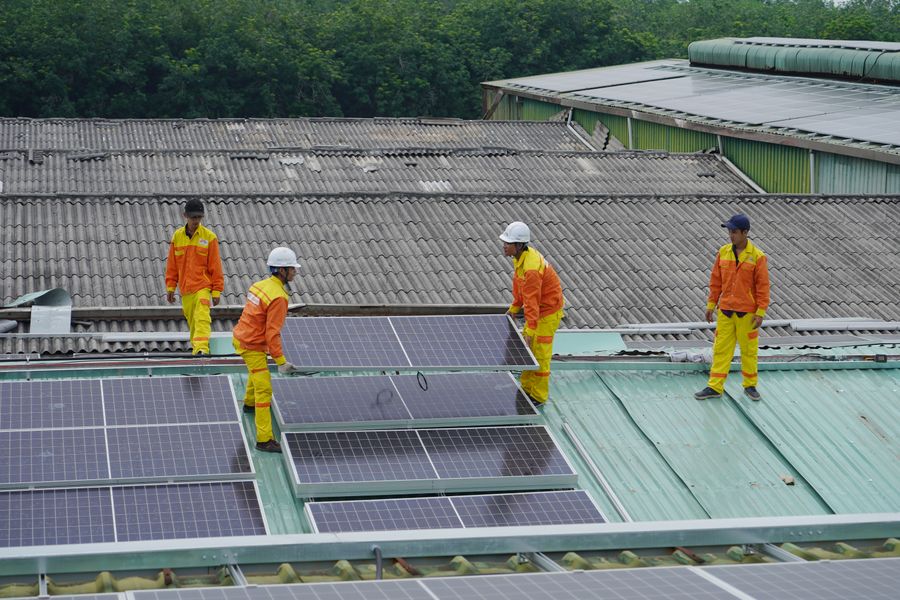
A large share of installation-day problems were created weeks earlier, when a system was designed from a satellite image and a photograph of the meter. The panel layout does not fit around a vent that nobody recorded. The rafters are at a spacing the mounting kit does not suit. There is no route for the cable that does not cross a bedroom.
What follows is improvisation under time pressure, which is where defects come from. A crew that arrived expecting a day’s work and finds a different building either goes away and returns, which costs the company money, or adapts on the spot, which costs the customer quality.
The remedy is entirely preventable. A survey that involves someone standing in the loft and on the roof, before the equipment is ordered, eliminates most of this category. Where a company proposes to install without one, that is a reasonable thing to push back on.
The defects that recur
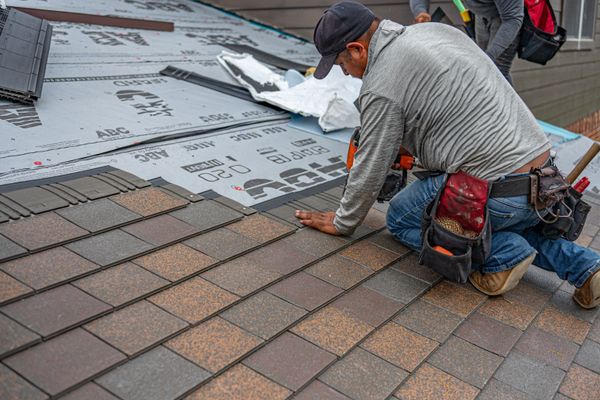
Broken tiles are the most common and the least serious, since they are trivially replaced provided somebody notices and does it. Tiles disturbed and not properly reseated are worse, because they look fine and admit wind-driven rain.
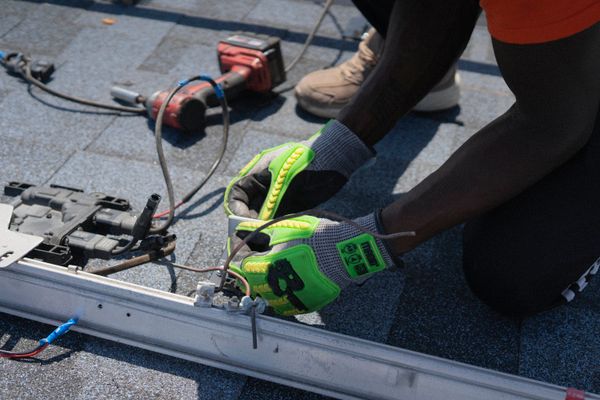
On the electrical side, direct-current connectors are a persistent source of trouble. The plug-and-socket connectors used on panel leads look interchangeable between manufacturers and are not; mating a plug from one maker with a socket from another can produce a connection that appears sound, passes a test, and develops resistance over years until it heats. Standards require matched pairs for exactly this reason, and it remains one of the most frequently cited defects in inspections.
Then a familiar list: cables left resting on the roof covering or on a sharp edge rather than clipped and supported, direct-current cable runs inside the building without appropriate protection, isolators unlabelled or wrongly labelled, earth bonding omitted from mounting rails where the standard requires it, and cable entries sealed with mastic instead of a proper gland.
Commissioning is a set of tests, not a switch-on
Turning the system on is not commissioning. Commissioning means measuring what was built and recording it: insulation resistance of the direct-current circuits, open-circuit voltage and short-circuit current of each string against the calculated values, polarity, earth continuity, and the correct operation of the protective functions.
Those figures matter later as much as now. A string test recorded at handover is the baseline against which a future fault is diagnosed, and without it, anybody investigating a problem in five years is starting from nothing. The absence of test results is not merely a paperwork gap.
The handover pack should also contain the as-built layout, the equipment datasheets, the design calculations, the warranty documents with their start dates, and whatever certificate the local regime requires. Ask what the pack will contain before work starts, since it is much easier to obtain then than afterwards.
Permissions, which vary enormously
Nearly everywhere, connecting generation to the network requires either notification or prior approval from the network operator, and the threshold between the two is set locally. In some jurisdictions a small domestic system is notified after the fact; in others nothing may be energised until the operator has assessed the local network capacity, which can take weeks.
Building consent is a separate question and equally local. Some places treat rooftop panels as permitted development with conditions on projection and position; others require an application, and conservation areas or protected buildings frequently have their own rules. Electrical work will additionally fall under whatever certification regime applies to the country.
None of this is something a general article can resolve, and that is the point. Ask specifically which permissions apply to your address, who is obtaining them, and what happens to the timetable if approval is delayed or comes with an export limit attached.
The fortnight after the scaffolding leaves
Two checks are worth making deliberately. After the first heavy rain with wind behind it, go into the loft with a torch and look at the underlay and rafters beneath the array for staining or drips. After the first genuinely clear day, compare what the monitoring reports against what the design predicted for those conditions, allowing for the fact that a single day proves little.
A string producing noticeably less than its neighbour on an unshaded roof is the classic early signal, and it is much easier to have addressed while the installation is fresh and the relationship is current. So is an inverter reporting faults it clears by itself, which people tend to ignore and which is often the first sign of a wiring problem.
It is worth saying that most installations are fine. The trade is generally competent and the equipment is generally good. But the inspection costs an hour and the alternative is discovering a defect after the point at which anyone feels responsible for it.
Common questions
Should I be at home during the installation?
It helps, mainly so that decisions about cable routing and equipment position are made with you rather than for you. Those choices are frequently made on the day, they are difficult to reverse, and the person making them is optimising for the shortest cable run rather than for your kitchen wall.
How long should a domestic installation take?
A straightforward array on an accessible pitched roof is commonly a day or two of work once scaffolding is up, with a further visit for commissioning or metering in some arrangements. A job that is being compressed into a few hours is one worth watching, and a job that overruns badly usually means the survey missed something.
Can I inspect the work myself if I know nothing about electrics?
You can inspect a surprising amount without touching anything: labelling, cable support, the cable entry, the loft, and whether the paperwork exists. Do not open enclosures or interfere with direct-current wiring, which remains live whenever there is light on the panels and cannot be switched off from the consumer unit.
Consumer editor, Power Your Roof
Kabir covers solar basics, batteries, bills & tariffs and the questions readers actually send in and is happiest when a piece answers the question completely.