Installation
Direct current is the part of a solar system that cannot be switched off
A lit array is live whatever the inverter is doing, and direct-current faults sustain arcs that alternating-current faults would extinguish, which is why the safety measures cluster there.
By Manish Trivedi4 min read
The array is live whenever there is light
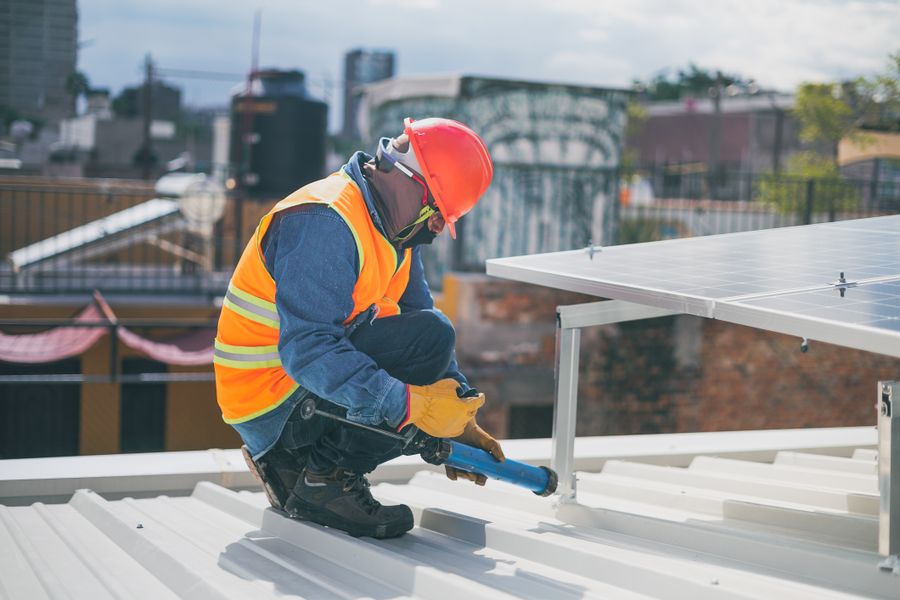
Switching off an inverter doesn’t de-energise the panels. Photovoltaic cells generate whenever light falls on them, so the conductors between the modules and the isolator remain at voltage regardless of what any switch downstream is doing. There is no off position on the roof, and there cannot be one without extra equipment.
That voltage isn’t trivial either. A domestic string operating at several hundred volts is well beyond the level at which contact is dangerous, and it is present on a cold clear morning before anyone in the house is awake. The isolators exist to break that circuit at a defined point, not to stop it existing.
It is a genuinely unusual property in a domestic electrical installation, where the assumption everywhere else is that removing the supply makes things safe. Anyone working on the roof, and anyone attending an incident there, has to work from a different assumption.
Why a direct-current arc behaves badly
Alternating current passes through zero twice in every cycle, and an arc struck across a gap tends to extinguish itself at that moment. Direct current never crosses zero, so once an arc is established it can sustain itself, drawing power continuously and reaching temperatures that ignite anything nearby.
This is why direct-current switchgear is built differently from its alternating-current equivalent, with longer contact gaps and arc chutes designed to stretch and cool the arc until it fails. It is also why fitting a switch not rated for direct current into a photovoltaic circuit is a serious error rather than a technicality.
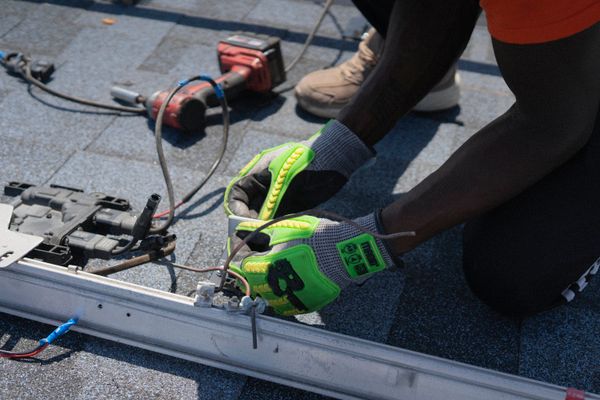
The everyday consequence is that a poor connection is more dangerous here than elsewhere. A joint with a little resistance heats, heating degrades the joint, degradation increases the resistance, and the process can end at a small persistent arc inside a connector on a roof. That feedback loop is the origin of most direct-current incidents, and it starts with workmanship rather than with equipment.
What the mitigations do
Isolation is the first layer. There is normally a switch adjacent to the inverter, and depending on local rules there may be another at the array, so that the run through the building can be de-energised from either end. Their location should be known to the household and reachable without a ladder.
Arc-fault detection is the second. Some inverters monitor the electrical signature of the direct-current circuit for the characteristic noise an arc produces and shut down when they see it. It is a genuinely useful protection and it isn’t a substitute for connections that were made properly.
Module-level shutdown is the third and the most divergent between jurisdictions. Some codes require that the voltage on the roof can be reduced to a safe level on command, which in practice means electronics at every panel. Other jurisdictions don’t require it at all. Neither position is unreasonable, and where you live decides which one applies to you.
Signs and documents are not bureaucracy
A solar installation adds a source of energy that an electrician or a firefighter arriving at the property has no reason to expect. Labelling exists to tell them, and the labels that matter identify the presence of generation at the intake position and at the consumer unit, mark the isolators clearly, and warn that the direct-current side remains live after isolation.
In many jurisdictions a diagram of the installation is required at the origin, showing where the array is, where the isolation points are and how the system connects. It costs almost nothing at installation and it is the difference between a rapid decision and a cautious one during an incident.
Emergency services generally do not refuse to attend a building with solar, which is a persistent piece of folklore. What they do is manage the roof as a live electrical area, which may change tactics. Clear labelling and an accessible isolator directly reduce how much caution is warranted.
What an owner can reasonably check
Not much of the electrical work is inspectable without instruments, and a few things are visible to anyone. Labels present and legible. Isolators accessible and marked. Cables clipped and supported rather than resting on tile edges or hanging in loops where wind can chafe them.
Cable ties are worth a look specifically. Ordinary plastic ties degrade under ultraviolet exposure and fail after a few years, at which point cables sag onto the roof surface and abrade. Ultraviolet-stable ties or metal clips are the correct choice, and this is one of the few workmanship details visible from the ground with binoculars.
Beyond that, the honest position is that this is a job for a qualified person with test equipment, at commissioning and periodically afterwards. The interval is set locally and the principle is not: an installation with a hidden defect gives very little warning, and the inspection is far cheaper than the alternative.
Common questions
Should I turn the system off when I go away?
There is no general need, and a system left running continues generating and exporting while you are gone. If you do isolate it, follow the shutdown sequence in the manual rather than pulling switches arbitrarily, since the order matters, and remember that the direct-current conductors on the roof remain live regardless.
Do solar systems cause house fires?
They are involved in a small number of incidents, and the causes concentrate in poor connections, damaged cables and unsuitable switchgear rather than in the modules themselves. That is an argument for competent installation and periodic inspection, and it is roughly the same argument that applies to any other significant electrical installation in a building.
Is rapid shutdown worth fitting where it is not required?
It is a defensible choice on a complicated roof or where local fire practice is cautious, and it means putting electronics under every module with the reliability implications that carries. Where the code does not require it and the roof is simple, the money usually does more good spent on the quality of the connections and the isolation.
Deputy editor, Power Your Roof
Manish has been reporting on solar basics, batteries, bills & tariffs since long before it was fashionable and would rather show the working than assert the conclusion.